Fresh!
Visual Language
An apple a day… boosts our gender competence. That is why it is your turn now, because these crisp examples provide real brain food for everyone interested in visual language.
Here we focus on the visual aspect, because not only verbal and non-verbal communication are socially shaped, but visual representations in images and moving pictures (clips/videos, series, films) can also reproduce stereotypes. So how can visual language be designed in a gender-sensitive and inclusive way?
“The image should support the content of the post; the message must come across at first glance. For longer texts, photos set accents and best illustrate the topic.” (1)
However, caution is required here: to ensure equal opportunities in all areas of life, this must also be reflected in photos, illustrations, and visualizations. Lived diversity and inclusion mean, for example, consciously avoiding stereotypical representations in order to visually depict equal professional and life realities.
Lived diversity can be reflected in the following aspects: clothing, body language and posture, positioning and alignment, lighting, color choices, decoration, as well as the consideration of different dimensions of diversity.
Only through reflection and attention to these dimensions – such as ethnic and cultural diversity, age, social background, gender, or sexual orientation – can an inclusive visual language be achieved.
Source:
(1) https://www.genderleicht.de/bildredaktion/
Die Mehrheit der sehenden Menschen betrachtet in der Regel zuerst ein Bild – sei es bei journalistischen Artikeln, in Zeitschriften, Magazinen, auf Websites oder auch im Social-Media-Bereich. Auch deshalb wird Bildern und Videos eine besondere Macht zugesprochen. Noch vor dem Lesen einer Unterschrift vermitteln Bilder bestimmte Botschaften, die zur Konstruktion der Wirklichkeit beitragen. Aus diesem Grund haben bildliche Darstellungen auch einen bedeutenden Einfluss auf die Gleichstellung der Geschlechter. Auch wenn ein Bild immer nur ein Momentum zeigt, ist es wichtig, sich seiner Aussagekraft und Wirkung bewusst zu sein.
Wichtige Merkmale und Bildelemente, über die Gleichstellung und Machtverhältnisse transportiert werden, sind:
- “Kleidung: Wer trägt einen Anzug, wer ist in Freizeitkleidung dargestellt?
- Haltung der abgebildeten Personen: Wer sitzt? Wer steht? Wer lehnt sich an? Wer steht mit beiden Beinen fest am Boden? Wer wird aktiv, wer wird passiv dargestellt?
- Blickrichtungen: Schauen Personen auf oder herab? Sind sie auf gleicher Augenhöhe?
- Anordnung der Personen: Wer ist im Vordergrund, wer im Hintergrund?
- Bildausschnitte bei Porträtfotos: Werden alle Geschlechter gleichwertig in Größe, Mimik, Farbe, etc. dargestellt?
- Wer wird in welcher Umgebung gezeigt, z.B. Männer bei der Arbeit, Frauen mit Familie etc.?
- Tätigkeit: Wer ist in Vortrags-, wer in Pausensituation (bei Tagungen) dargestellt?” (2)
Quelle:
Most sighted people usually look at an image first – whether in journalistic articles, magazines, printed media, on websites, or on social media platforms. For this reason, images and videos are often attributed particular power. Even before reading a caption, images convey certain messages that contribute to the construction of reality. For this reason, visual representations also have a significant influence on gender equality. Even though an image always captures only a moment, it is important to be aware of its expressiveness and impact.
Important features and visual elements through which equality and power relations are communicated include:
“Clothing: Who is wearing a suit, who is depicted in casual clothing?
Posture of the depicted persons: Who is sitting? Who is standing? Who is leaning? Who is standing firmly on both feet? Who is shown as active, who as passive?
Gaze direction: Are people looking up or down? Are they at eye level?
Arrangement of persons: Who is in the foreground, who is in the background?
Image cropping in portraits: Are all genders represented equally in size, facial expression, color, etc.?
Who is shown in which environment, e.g. men at work, women with family etc.?
Activity: Who is shown in a speaking situation, who in a break situation (at conferences)?” (2)
Source:
To make visual representations accessible for people with visual impairments, blindness, and/or neurodivergent people, it is important to add image descriptions to images, also known as alt text/ALT text.
On social media platforms and image editing programs such as Canva, there are usually designated fields for such captions. These texts are purely descriptive, meaning they are free of interpretation. A good guide for inclusive wording is provided by the website Gehirngerecht Digital (5). A popular application for AI-generated ALT texts is also available via the Be My Eyes app.
In addition, subtitles are essential in video content to enable participation for people who are, for example, deaf and/or neurodivergent. These should not only reproduce spoken words but also include descriptive elements, such as indications of background music or tone of voice. There are also corresponding programs and AI applications for this purpose.
Sources:
Already figured it out? Here you’ll find the corresponding image sources:
[A] Image source A
[B] Image source B
[C] Image source C
[D] Image source D
[E] Image source E
[F] Photographer: Julia Bergmeister, 2014
[G] Image source G
[H] Image source H
[I] Image source I
[J] krakenimages at unsplash.com
[K] Image source K
[L] Image source L
Was ist hier noch genießbar? Und was kann weg?
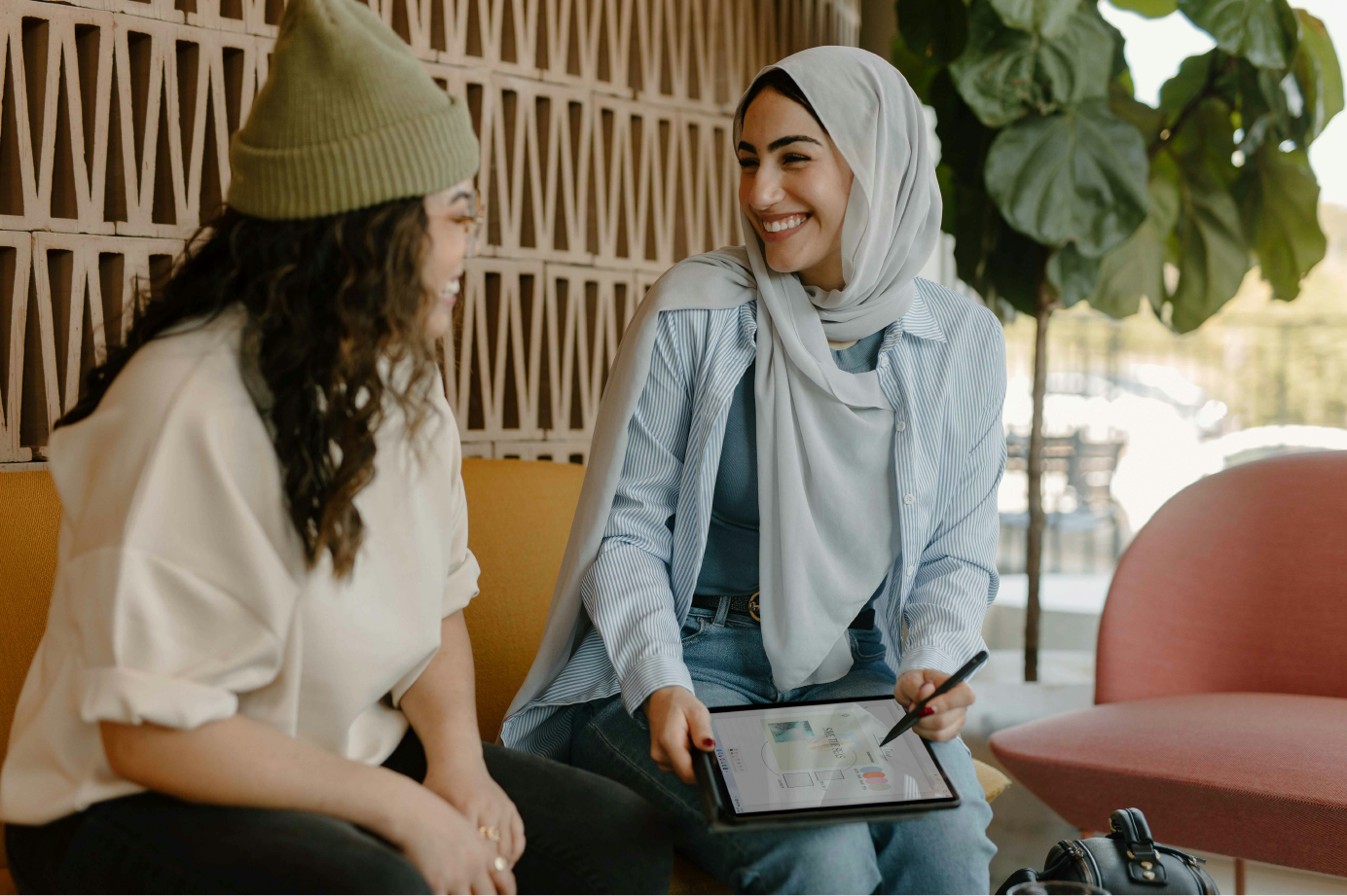
The image does show ethnic and religious diversity, but it lacks gender diversity. Mixed teams would be desirable – also in terms of gender representation. [A]
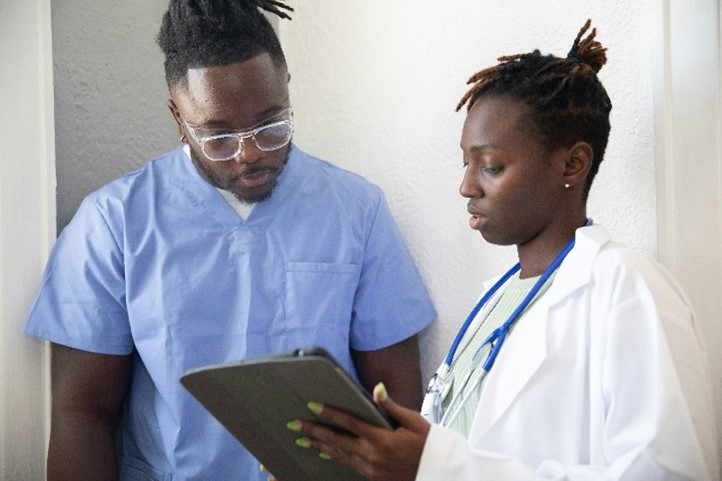
The typical distribution of roles is challenged here by depicting the woman in a higher professional position, explaining something to her male colleague. However, the man is not devalued through the composition of the image, the posture of the individuals, or their gaze direction. [B]

The woman’s clothing and her positioning turned away from the camera contribute to her being sexualized in her depiction at the workplace. [C]
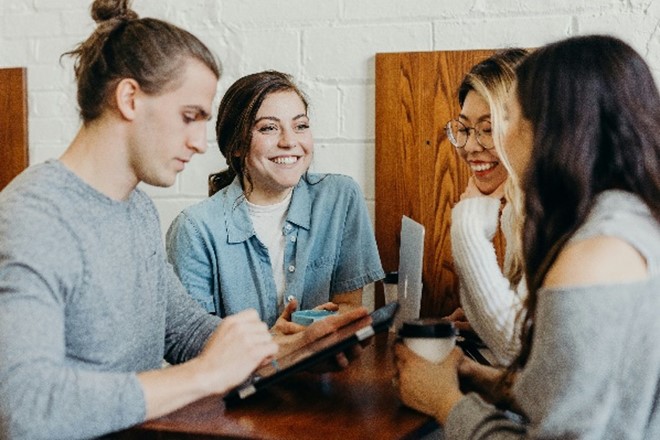
In this group work setting, ethnic and gender diversity is visible. In addition, stereotypical gender roles are challenged by showing the man taking notes while the women are discussing. [D]
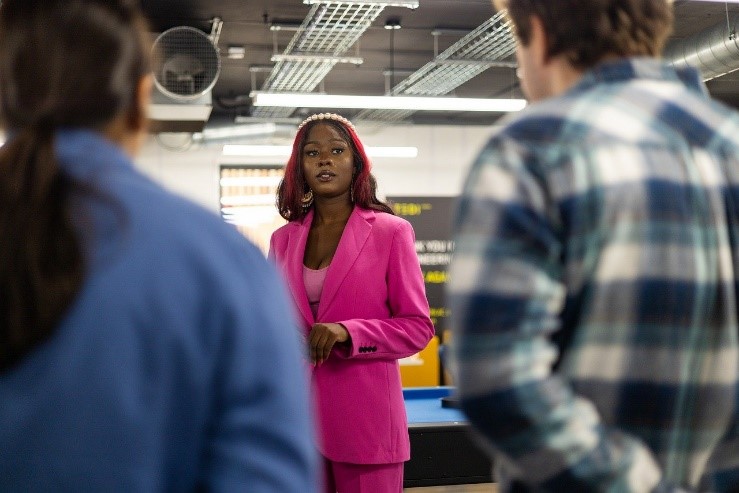
The woman in the image conveys seriousness and authority toward her employees. Despite her striking clothing, she is neither trivialized nor sexualized in the work environment, while at the same time ethnic diversity is represented. [E]
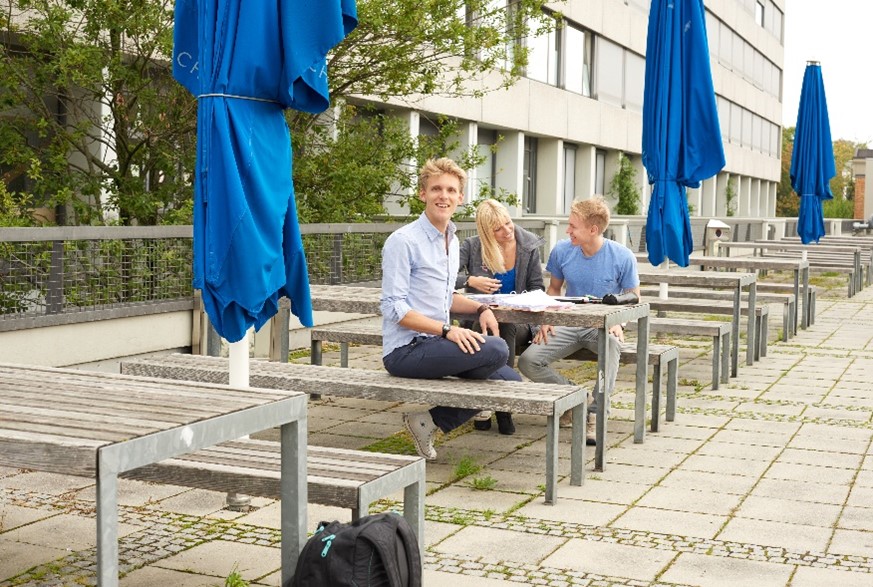
This image shows a very homogeneous group of students, indicating a lack of diversity and therefore not adequately reflecting diversity at the university level. [F]

The man and the woman are shown working together on equal footing, without any visible hierarchy based on clothing, posture, expression, or activity. [G]
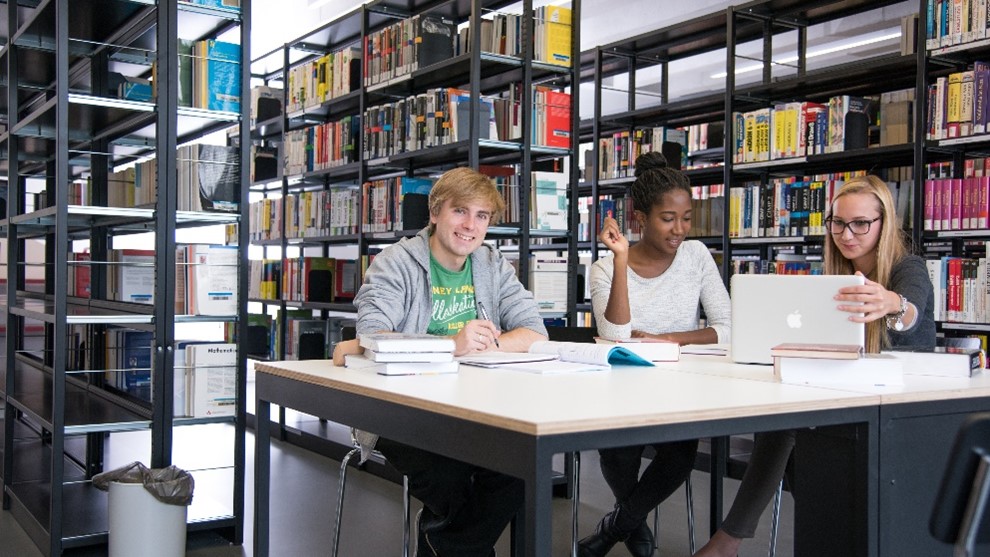
Despite visible ethnic and gender diversity, it is noticeable that the women lower their gaze while the man looks directly into the camera. As a result, he becomes the focal point of the image. [F]
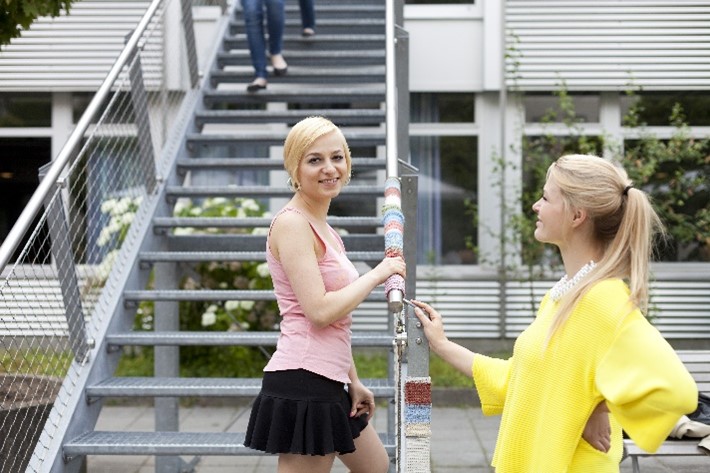
The female students are depicted here in a situation that is irrelevant to academic work. This not only trivializes their role, but their clothing also contributes to a potential sexualization. [F]
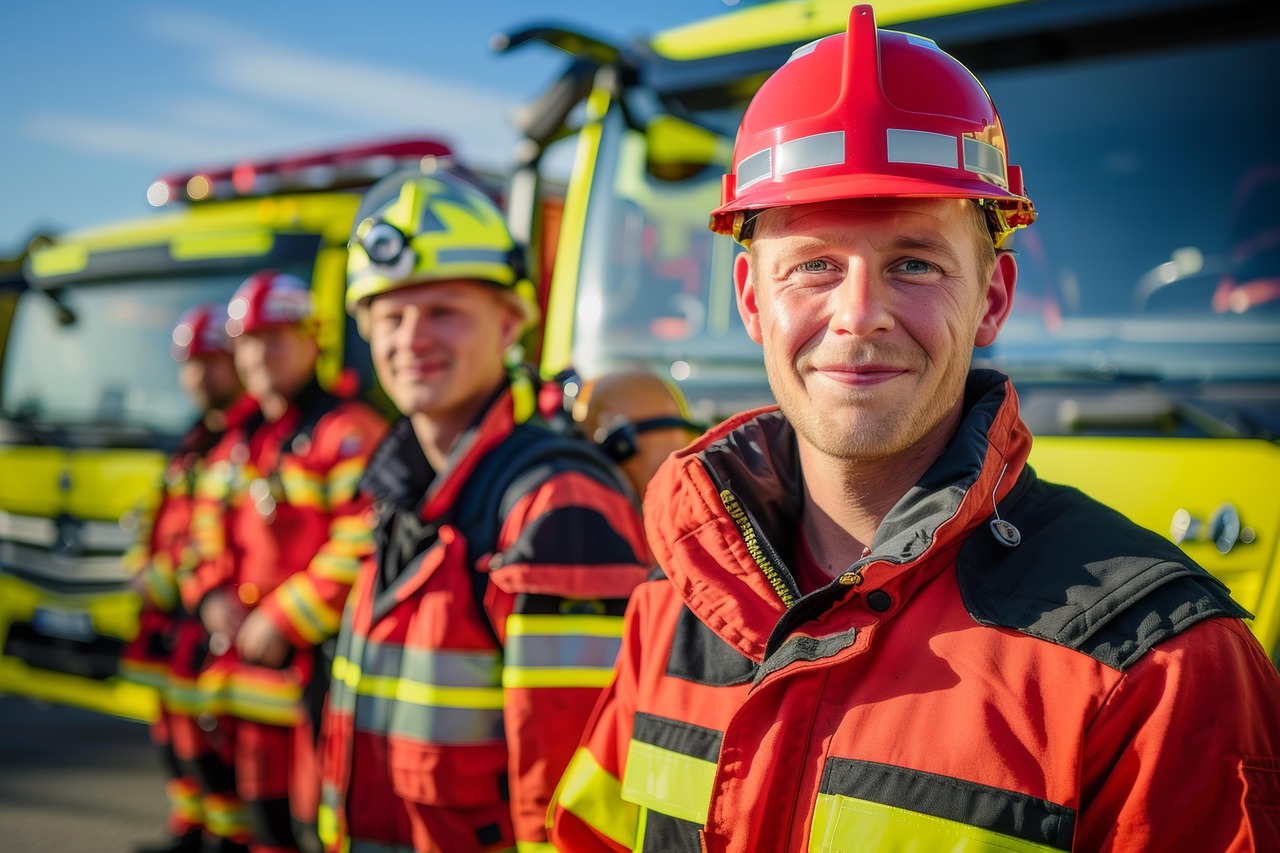
By showing only men in a male-dominated profession, stereotypes are reinforced. [H]

Although the image shows men and women in a balanced, equal professional context, it not only lacks diversity but also appears staged and inauthentic. [I]
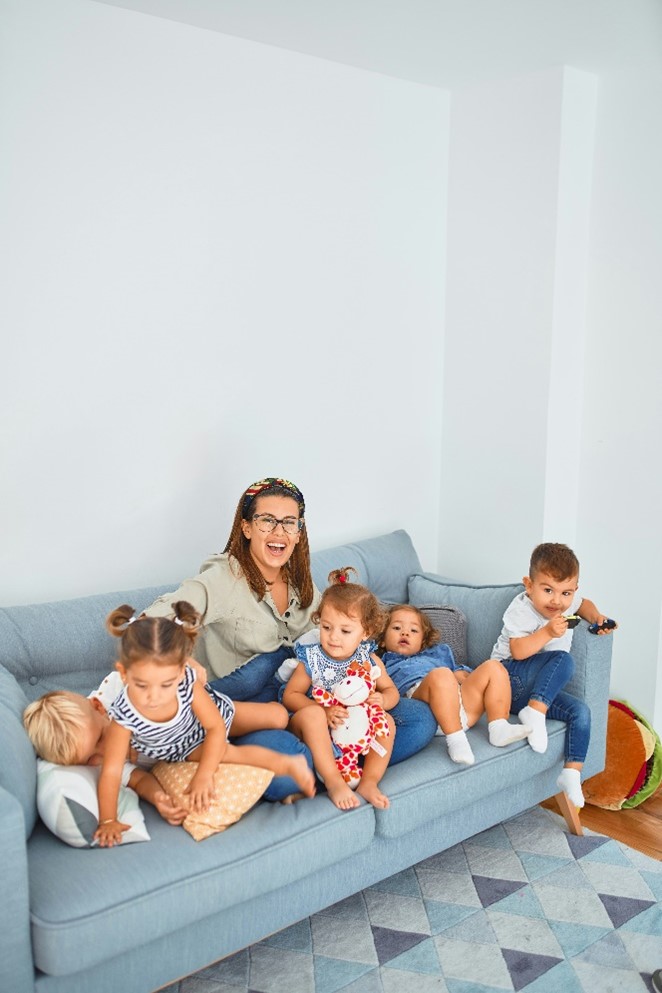
Whether as a mother in a domestic setting or in professional caregiving work, this depiction of the woman reproduces traditional gender roles and stereotypes. [J]
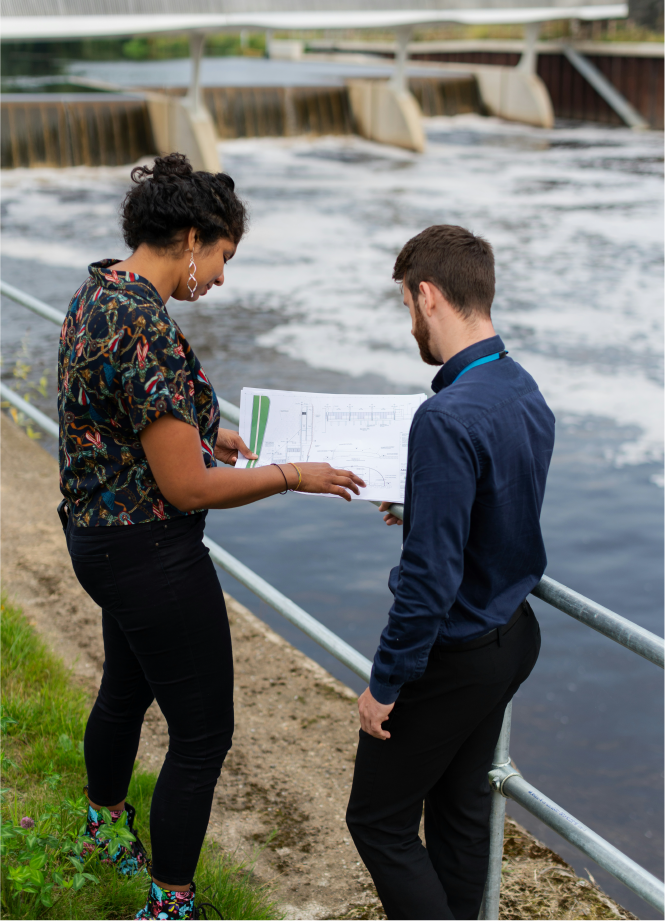
The depiction of the two individuals is balanced. In addition, the woman is shown in a technical and thus typically male-dominated professional field, countering common stereotypes. [K]

Although she performs the same professional role, the woman is placed in the blurred background without any apparent reason, making her appear less prominent. [L]