Baking Ingredients

Best Practice
Our cocktail cherries provide that special extra for a teaching approach that shines. Here you will find best practice insights from lecturers using different gender-sensitive teaching methods. Let yourself be inspired!
Gil&Toni want to talk, and specifically with you: In short interview segments, lecturers from Munich University of Applied Sciences discuss which teaching methods are used in their courses. They also share how the dynamics in the lecture hall change through gender-sensitive enrichment and critically reflect on current and future teaching situations.
Not all of the teaching methods presented here have an obvious or exclusive connection to the topic of gender-sensitive teaching. Nevertheless, they contribute to a gender-sensitive learning atmosphere as well as to a general climate of openness. Often, all it takes is a shift in perspective and a willingness to experiment didactically in order to strengthen awareness of different needs, diverse cognitive prerequisites, and students’ life situations. Through a variety of teaching methods in courses, participation in teaching is made possible for all students regardless of gender, ethnic background, religion or worldview, disability, age, or sexual orientation, which demonstrably and noticeably increases overall learning and academic success.
Do you also have innovative ideas and experiences you would like to share? Or are you looking for support and hoping for more exchange on these topics? Whether you are a lecturer, student, or part of the university community in general, Gil&Toni look forward to your experiences and questions! Feel free to write to us at: gilundtoni@hm.edu.
Watch our best practices videos:
-

Courage for the Great Transformation
with Ralph Buchner Ralph Buchner has been teaching design at Faculty 12 for over 20 years. His new passion is the innovation […]
with Ralph Buchner
Ralph Buchner has been teaching design at Faculty 12 for over 20 years. His new passion is the innovation professorship in the field of transformative teaching. In the interview, Ralph Buchner talks about how we can actively help shape the great global transformation while pushing back against a struggling education system. Can this process also initiate a cultural shift toward gender and diversity sensitivity?
The new era of metamodernity not only brings profound changes to different areas of society, but also involves a transformation of personal identity. As co creators of the present, it is up to us to acknowledge that we are part of a dynamic force field shaped by interdependence, co creativity, and symbiosis. Within the chaos of the great transformation, cultural patterns are born and new movements and counter movements continually emerge. In the search for one’s own role, it is advisable, even within gender sensitive and modern teaching, to engage heart intelligence and gut instinct just as much as rational thinking.
featuring
-
Get Your Classroom Flipped
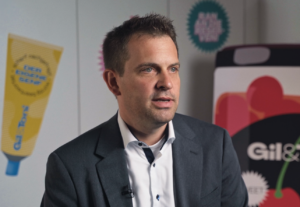
with Bastian Katz Bastian Katz, Professor of Software Engineering at Faculty 07, talks about what excites him about teaching. He also introduces […]
with Bastian Katz
Bastian Katz, Professor of Software Engineering at Faculty 07, talks about what excites him about teaching. He also introduces the Flipped Classroom approach. In this model, students receive learning materials before the class, allowing them to explore a topic independently. During the seminar, the content is then explored in greater depth, practiced, and expanded together. This method promotes equal opportunities among students, as they can acquire knowledge at their own pace at home and then actively contribute to the learning process.
During the interview, Bastian Katz also reflects on his own learning journey with regard to gender sensitive teaching and emphasizes the importance of professional role models in breaking down stereotypes, especially in a field like computer science that is still largely male dominated today.
featuring
Sweet & Sour Sauce – Learn more about the spiciest gender gaps
-

Expert Talk: Here Come the Pros
with Jörg Reinhardt Jörg Reinhardt, Professor at Faculty 11, teaches the legal foundations of social work and early childhood education. He introduces […]
with Jörg Reinhardt
Jörg Reinhardt, Professor at Faculty 11, teaches the legal foundations of social work and early childhood education. He introduces the Expertise Talk, a teaching method he uses to enliven comparatively dry theoretical content. In this interview based format, professionals from the field share their experiences in their respective sectors and answer students’ questions.
By linking theory and practice, interaction in the classroom is significantly increased. At the same time, the interviews spark students’ interest in potential career paths and offer opportunities to establish initial professional contacts. This method is therefore particularly well suited to encouraging women and queer people to explore non traditional career fields and to challenge occupational stereotypes.
featuring
-
Complaints, Utopia, Change: Let’s Get This Future Started
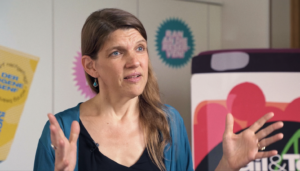
with Claudia Stracke Baumann Claudia Stracke Baumann is Professor of Practice Methods in Social Work at Faculty 11 and also a true […]
with Claudia Stracke Baumann
Claudia Stracke Baumann is Professor of Practice Methods in Social Work at Faculty 11 and also a true expert in the Future Workshop. In the interview, she explains why the Future Workshop is a creative and gender sensitive teaching method for engaging with social issues.
The Future Workshop consists of three core phases: the critique and complaint phase, the fantasy and utopia phase, and the reality and practice phase. In each phase, students can actively contribute, choose their own topics, and help drive the process forward. They interact with one another and with the facilitating instructor in a respectful and equal manner. Together, they explore how wishes can be turned into reality. The aim of this method is to develop solutions from which concrete demands can then be derived. All participants, regardless of gender, are motivated and empowered through the experience of self efficacy to initiate social change.
featuring
Sweet Spread: an extra serving of gender equality policy
Cocktail Cherries: for more practical inspiration from teaching